A new book by Andrew Newman
Your spark didn't leave you. You just hit a quit point.
There are 12 predictable places where nearly everyone stops creating: a doubt, a wobble, a boredom, a fear. This book names all 12 and shows you the way through each. Take a look inside.
See inside the book
We'll send the sample chapter and a look at the interior. No spam.
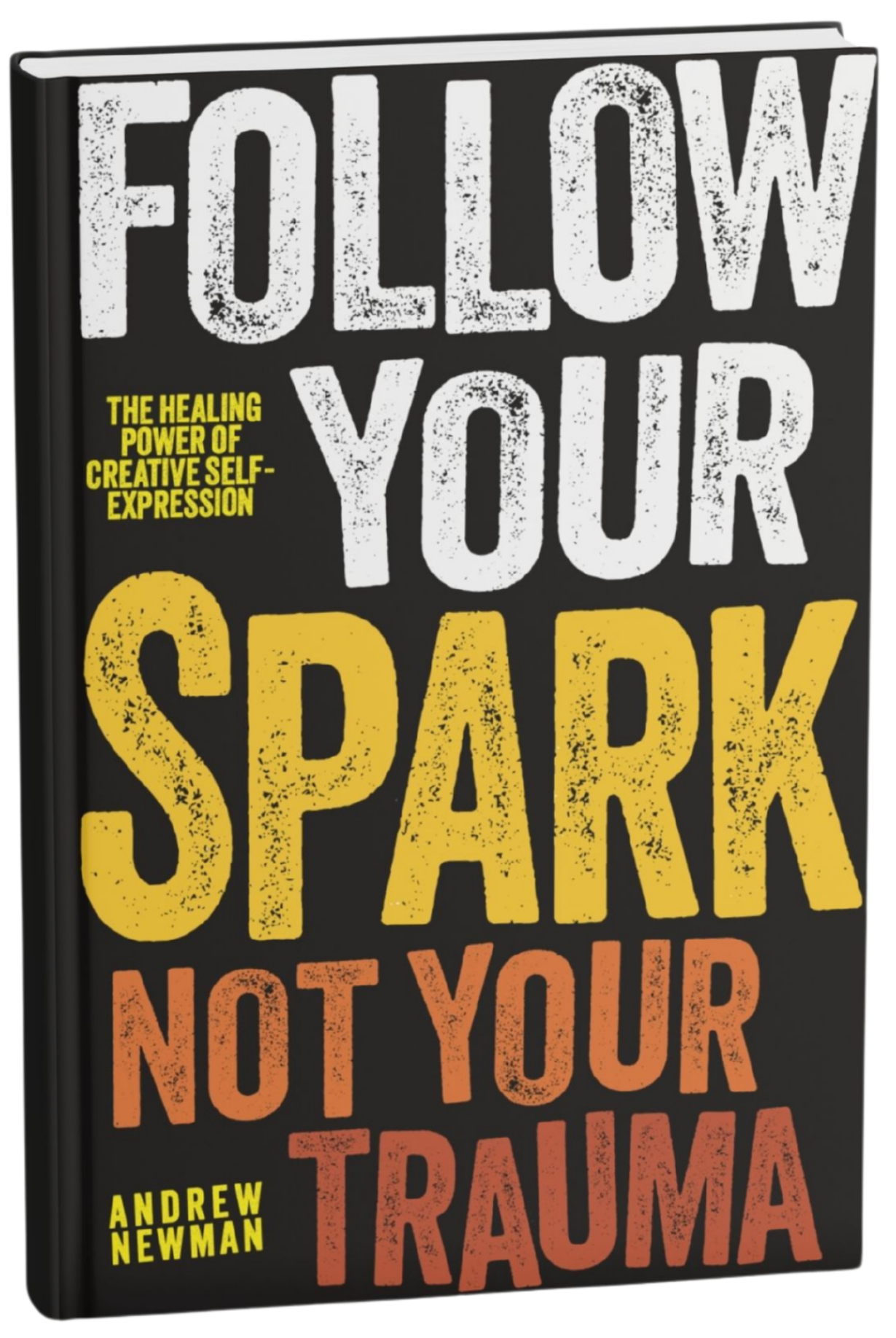
The new book · September 2026
What if the way forward isn't through your trauma — but past it?
A reframe on healing: when your life feels stuck, the path isn't backward through your wounds — it's forward, following your spark. There is no greater medicine for the soul than creative self-expression.
Get the book →Paperback or instant ebook · the deep-dive into Chapter 5 of Unhide Yourself
The reframe
For years we've been told the road to healing runs backward — dig up the wound, name it, relive it. Maybe you've done that. For years. And somewhere along the way, the digging became the identity.
There's another way in. Not through the trauma — past it. Through the thing in you that still wants to make, write, move, play. From being "uncreative" in my twenties, I was catapulted into writing. When I create, I heal. I wonder if that's true for you too.
This book doesn't come with a trigger warning. It comes with a glimmer warning. Expect joy.
"I've read a shelf of trauma books. This is the first one that made me want to make something the same day."
— Lisa B.
"I've written a haiku every day for a year. Because of Andrew's invitation, and reminder to express myself."
— Yvonne
"Andrew writes like he's sitting across from you, believing in you until you do."
— Emilia
Discover where you quit your creative flow
Tap the ones that land.
The Self-Doubt Brakes
The idea's brilliant, then the voices explain why it won't work.
DoubtThe Analysis Spiral
Hours spent understanding the block instead of taking a step.
AvoidanceThe Hesitation Cliff
You've decided, and still you hover at the edge for weeks.
HesitationThe Speed Wobble
One bad day starts to feel like proof you were wrong to start.
PanicThe Chaos of New Things
Too many moving parts. You don't know where to begin.
ConfusionThe Drudgery
The excitement's long gone. It's just work now.
BoredomThe Hunger for Excitement
A shiny new idea outshines the half-done one you're on.
DistractionHide 'n Seek Games
You made it, and it's going straight in the drawer.
HidingThe Dirty Filter
You only hear the criticism. The praise slides off.
SuspicionThe Rush
Finished, already racing on, the win uncollected.
UrgencyThe Flogging
Alone with the replay of every mistake.
Self-punishmentThe Dismissal
“It was nothing, really. Anyone could have done it.”
DenialYou've found where you quit. The book shows you exactly what to do at each one, so you keep going instead of stopping.
Get the book →Three things the book gives you
If you're stuck, here's what changes.
You finish what you keep abandoning.
You learn the 12 places you quit and exactly what to do at each: the small step that gets you moving again. The projects that stall start getting made, and every finish rebuilds your trust in yourself.
You heal by making things.
You make something, and the act of making is the medicine. That's the reframe: when you create, you heal.
You feel good about being you again.
You meet the old voices with kindness and rewrite the story you've carried. You come out lighter, surer, living a life you'd put on hold.
Meet Andrew — 90 seconds
A short, warm welcome to camera: why you wrote this, and the glimmer warning.
Inside the book
This isn't a wall of text. It's a mapped journey with original watercolour and pencil illustrations showing how to overcome the Echoes, the childhood voices that whisper "you can't".


Get the book
- The physical book, shipped to your door
- Free instant ebook so you can start tonight
- Space to write — the book has room to create in
30-day, no-questions guarantee. If it doesn't land, tell me and I'll refund you — the risk is mine. confirm
Supporting Neurodiversity
"For the first time, my brain made sense on paper."
I have ADHD. I start ten things and finish none. I always thought that was a flaw. Then I found myself at one spot on the Creative Cycle map: the Hunger for Excitement. Turns out it wasn't a flaw. It was a quit point. It had a name.
— Sandra, L.A.
"I'm not lazy, just stuck. Now I know what to do."
I'm neurospicy, and the Analysis Spiral is my whole personality. I plan the plan. Forty tabs open and I call it work. This map gave me somewhere to stand. I'm not stuck everywhere. I'm stuck right here. And this spot doesn't want another spreadsheet. It wants me to commit.
— Katherine J.
"Finally, the psychology of creativity clicks."
As a neurodiverse reader, I can hyperfocus for six hours and then not touch the thing for a month. I didn't need another lecture. I needed a picture. Now I can point to exactly where I fall off. Usually it's the same spot every time. Seeing the pattern is what keeps me moving.
— Peter (workshop attendee)
Questions
Is this another trauma book?
The opposite. It doesn't ask you to relive anything. It comes with a glimmer warning, not a trigger warning — and points you forward, toward creative action.
I'm not "a creative." Is this for me?
Especially for you. I was "uncreative" in my twenties too. The belief that you're not creative is one of the twelve quit points — this book is about undoing exactly that.
Do I need to have read Unhide Yourself first?
No. This is the deep-dive into its Chapter 5, but it stands completely on its own. If you've read it — welcome back. We're going much deeper now.
Do I need to have done therapy first?
No. Wherever you are is the right place to start. Reach for your spark, and reach for support if you need it — both will help you heal.
You just have to begin.
You don't need the whole plan. You need the next small move. This book is that move.
Get the book →